Tailor-made feed to revive cod fish farming
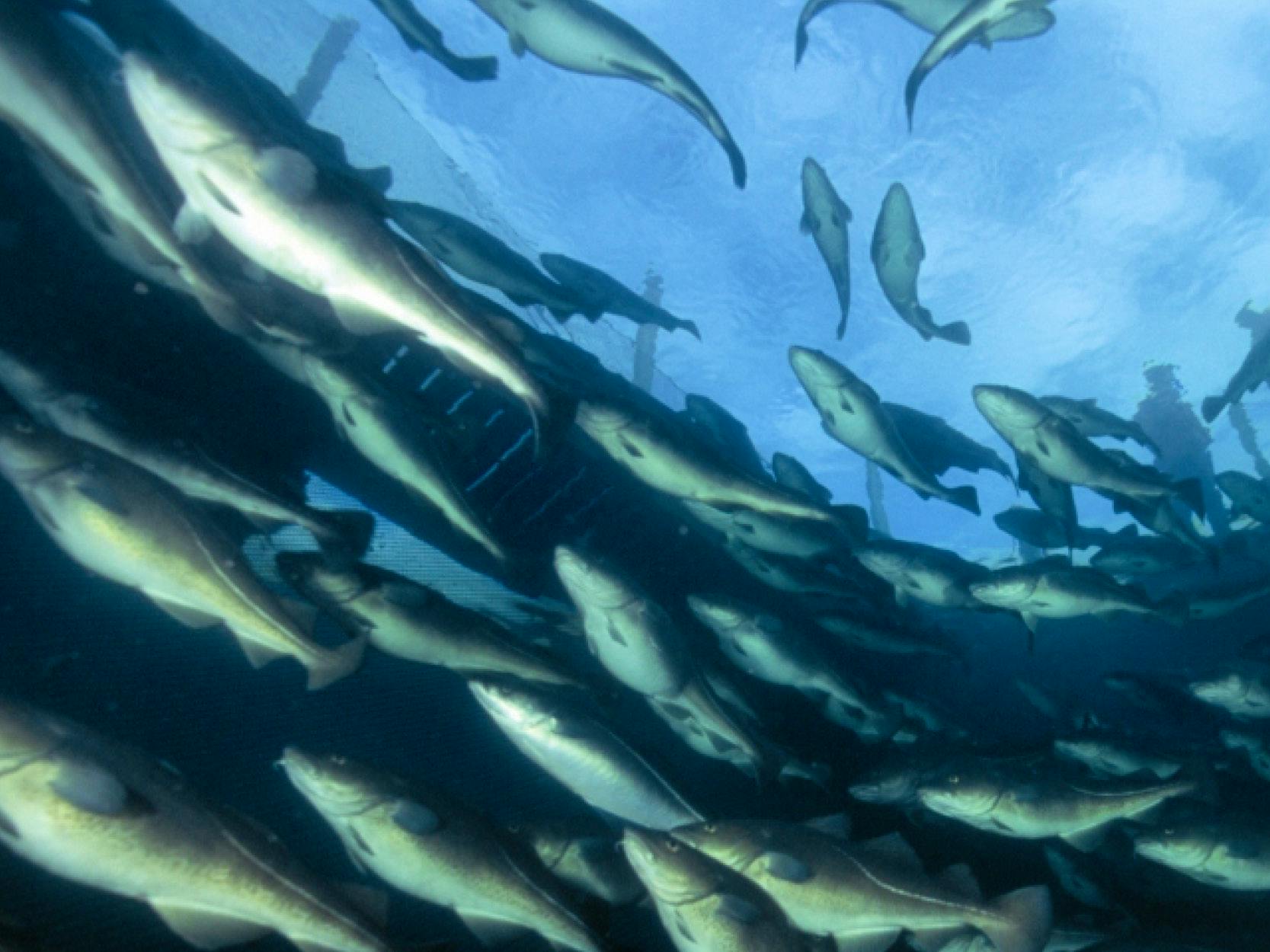
Havland, the leading cod breeder in Norway, calls for development of specialized cod feed if the industry is to thrive in the future. To initiate that process, the cod specialist has reached out to Danish feed supplier, Aller Aqua. Together they aim to reinvigorate large-scale farming, implement new technology, and improve animal welfare.


In Florø, Norway, cod pioneer, Havland, now eyes a brighter future for the cod farming industry.
The highly specialized company has been breeding, farming, and developing cod for decades and witnessed the industry struggle as much as the wild population of cod.
CPO, Halvard Hovland, has been leading Havland since 2000, and he has followed the market’s ups and downs. According to him, the business of farming cod has now reached a critical crossroad. More in-depth knowledge and a broader understanding of individual fish species is essential if consumers are to serve cod at family dinners in the future.
“We have an entire ecosystem changing – in part because of overfishing and invasive species like the Russian snow crab. Add to that climate change, allowing species like mackerel to swim further north and feed on the cod fingerlings,” says Hovland and expresses his deep concern for marine life.
Yet, people continue to claim that they have done the math and understand what is happening, assuring us that the cod will be coming back. Frankly, I don’t think anyone on Earth can say that for sure at this time.
Working tirelessly to save the cod
Along with his 45 employees at Havland, the CPO has therefore embarked on a quest to present a more sustainable way to produce healthy farmed cods for a demanding market.
The wild cod stocks are at an all-time low, and cod prices at an all-time high. Here in Norway, farmed cod is now competing with salmon when it comes to prices. Had you predicted this scenario five to ten years ago, people would have said that you’d lost it. All to say, that the macro picture for developing cod farming is really good right now.
However, doing so will entail some dedicated work related to live prey, improving water treatment, studying genetics as well as understanding first-feeding protocols. Recently, the CPO has increased his focus on the latter; what the cod needs in all stages of its life.
“For far too long the industry has only talked about ‘marine fish feed’. But what is ‘marine fish’? We are talking about a lot of completely different species with completely different needs. It is as if a farmer only had one type of feed for his cows, pigs, chicken, and sheep. Nobody in their right mind would accept that.”
Halvard Hovland calls for a more diverse look at feed for fish farms.
“The simplification when it comes to feed just won’t do. To have a single-species focus, utilize the full potential in its genetics, and to ensure a good fish welfare in future stock at the same time, a full focus on feed is a key priority”.


Developing the industry through specialization
In Norway, the salmon industry has dominated fish farming for years. This has led many local feed manufacturers to focus primarily on volume. According to Hovland, this needs to change if fish farming is to comply with growing market demands.
We need to understand that cod is not a strange kind of salmon. A cod is a cod, and it needs different things to develop, grow and become a healthy adult. But so far noboby has developed tailor-made cod feed.
To initiate the necessary change, Havland has reached out to Danish fish feed developer Aller Aqua. For more than 60 years the family-owned feed supplier has made it its hallmark to prioritize biological research and preliminary R&D-work in order to produce feeds for several different kinds of aquaculture species.
“With Aller Aqua, we have experienced a dedication to developing recipes for cod feed that we haven’t seen in our industry before,” Hovland explains, and continues:
In Norway, the main focus is on salmon. And it is all about high-volume, really. In this project we work with lower volumes and a low-fat particles. Aller Aqua has a dedicated species focus and they already make feed for a lot of different types of fish internationally.
With this level of specialization, the CPO hopes that Havland and Aller Aqua can present and produce a unique feed formulation for cod. Not just for the growth phase but for all the stages of the species’ life – from fry and fingerlings to adult fish.
Collaboration drives innovation onward
The collaboration with Havland is also highly valuable for Aller Aqua. According to Sales Director, Lars Rohold, it was in fact just the project the Danes were looking for.
”Havland is perhaps the most knowledgeable and experienced partner in the world when it comes to cod. They have a delivery of approximately 80% of fingerlings to the market and have been spearheading breeding in the past 20+ years. And then they have the optimal facilities to support the R&D-work required to succeed,” he says and adds:
“There is such a potential around cod right now, and this species falls directly into our core business. So to find someone equally curious, engaged and dedicated, is very encouraging.”
Sustainable production requires solid investments
Feed is not the only area of focus at Havland, though. During the past couple of years the cod breeder has worked hard to update and modernize its two facilities in Florø.
“Working with refining genetics and our first-feeding protocol, we have also implemented new water treatment technology. We need to combine all these components in order to industrialize, develop, and scale up, really.”
Havland has been investing significantly in large-scale capacities for their broodstock and for its extensive fingerling production. One of the most significant improvements was integrating a so-called ‘RAS’ system with the company’s land-based farming facility in Florø.
“Our strategy is to keep cod in a closed system. It helps us have full process control on everything from light, temperature, and current, to oxygen levels and pathogens. RAS is one of the systems that helps us do that.”
RAS (Recirculating Aquaculture System) is an advanced water treatment solution developed to filter and clean the water in fish farming plants. The technology is applicable to both outdoor facilities as well as closed systems, like the one in Florø.
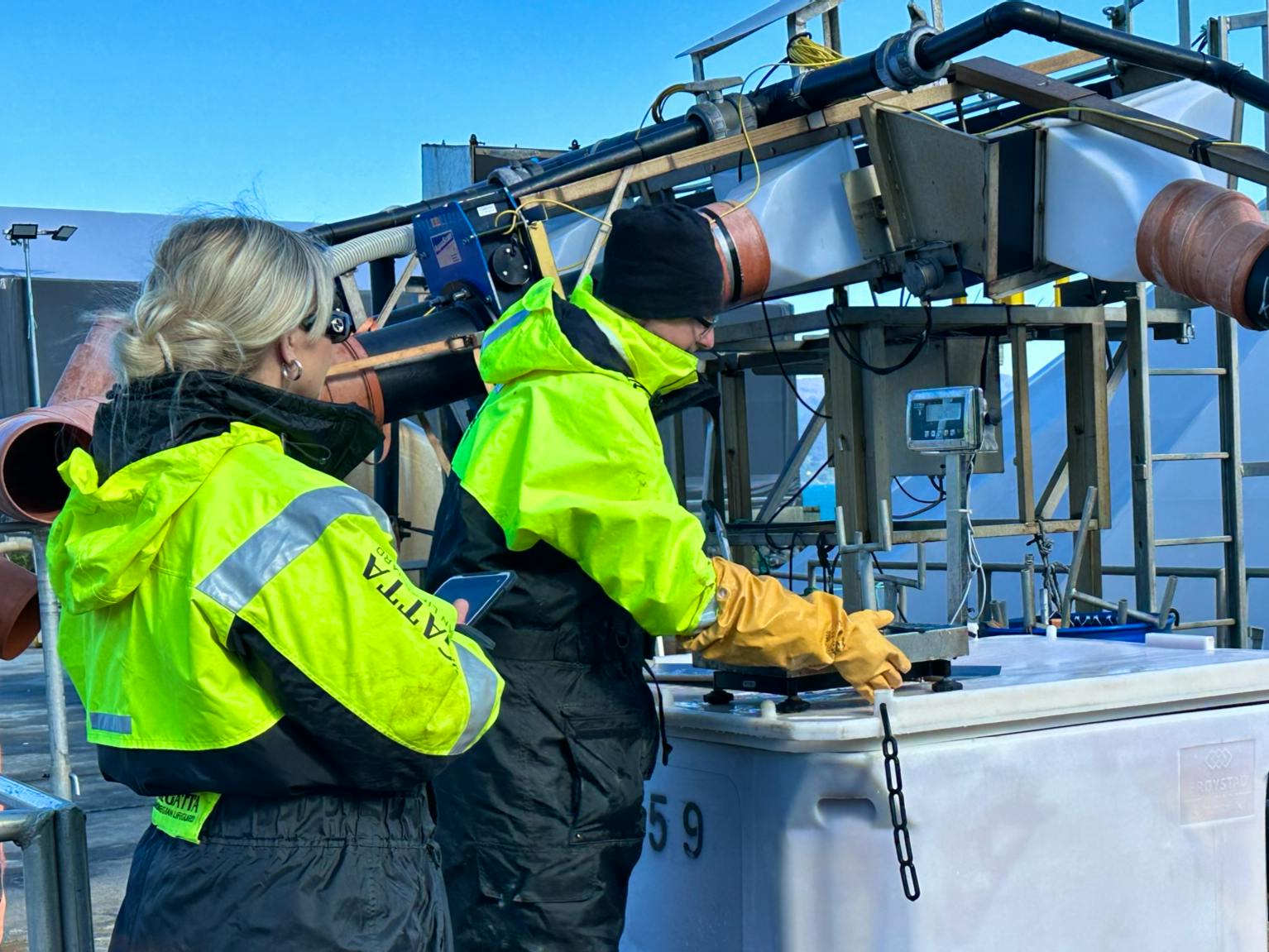
At our pilot farm we are already producing between 100 and 150 tons of market-size cod every year. RAS is a key part of developing technology to improve our breeding and farming.

Feed and RAS support sustainable farming
But even though RAS has so far proven extremely efficient in binding and filtering faeces and making the excess water clean – and by extension improving the conditions for the farmed fish tremendously – technical solutions are far from enough, says Halvard Hovland.
In Norway, the government expects you to filter out most of the faeces in the outlet water. So another task for us is to also minimise the amount of faeces altogether. So a dedicated cod feed is not enough. We should be talking about ‘environmental feed’, and with Aller Aqua, we are beginning to move in that direction.
At Aller Aqua, Lars Rohold agrees that success consists of a number of factors.
"We have not previously supplied RAS feed for cod, so that alone makes this an exciting assignment,” he says.
“It adds an entirely new dimension to our R&D work. Collaborating with Havland enables us to carry out development work under stable conditions and controlled water parameters. This gives us a major advantage when evaluating feed development and the effects of the feed itself.”
A brighter future for both fish and farmers
At Havland, CPO Halvard Hovland finally sees new opportunities emerging. With Havland’s investments in new technology and a new partner with a dedicated focus things are beginning to look brighter for the cod farming industry.
“Yes, this year we will be able to sell more than 20 million healthy fingerlings. So it's starting to become a rather large-scale operation,” he says.
With Aller Aqua, we now have a dedicated partner, it is encouraging and motivates us to set up new trials, making our technical infrastructure available to their R&D team, so we can run trials together. I am really optimistic now.
For Rohold, the cod project with Havland is another step in Aller Aqua’s pioneering journey to improve an entire industry and help farmers feed the world in a profitable and environmentally sustainable way.
We are working on optimising the biology of the fish while simultaneously evaluating new raw materials. This is not achieved through a single new formulation, but rather through stepwise improvements based on where we stand today.
The author of this article is Blerta Sulaj