New feed ingredients to improve reliability in aquaculture
Rising prices for raw materials, a growing focus on sustainability and a greater understanding of the nutritional requirements of fish and shrimp have prompted more feed producers to explore alternative ingredients for feed formulations. This research is proving to be very valuable and will provide the industry with new tools to navigate the rough seas ahead.


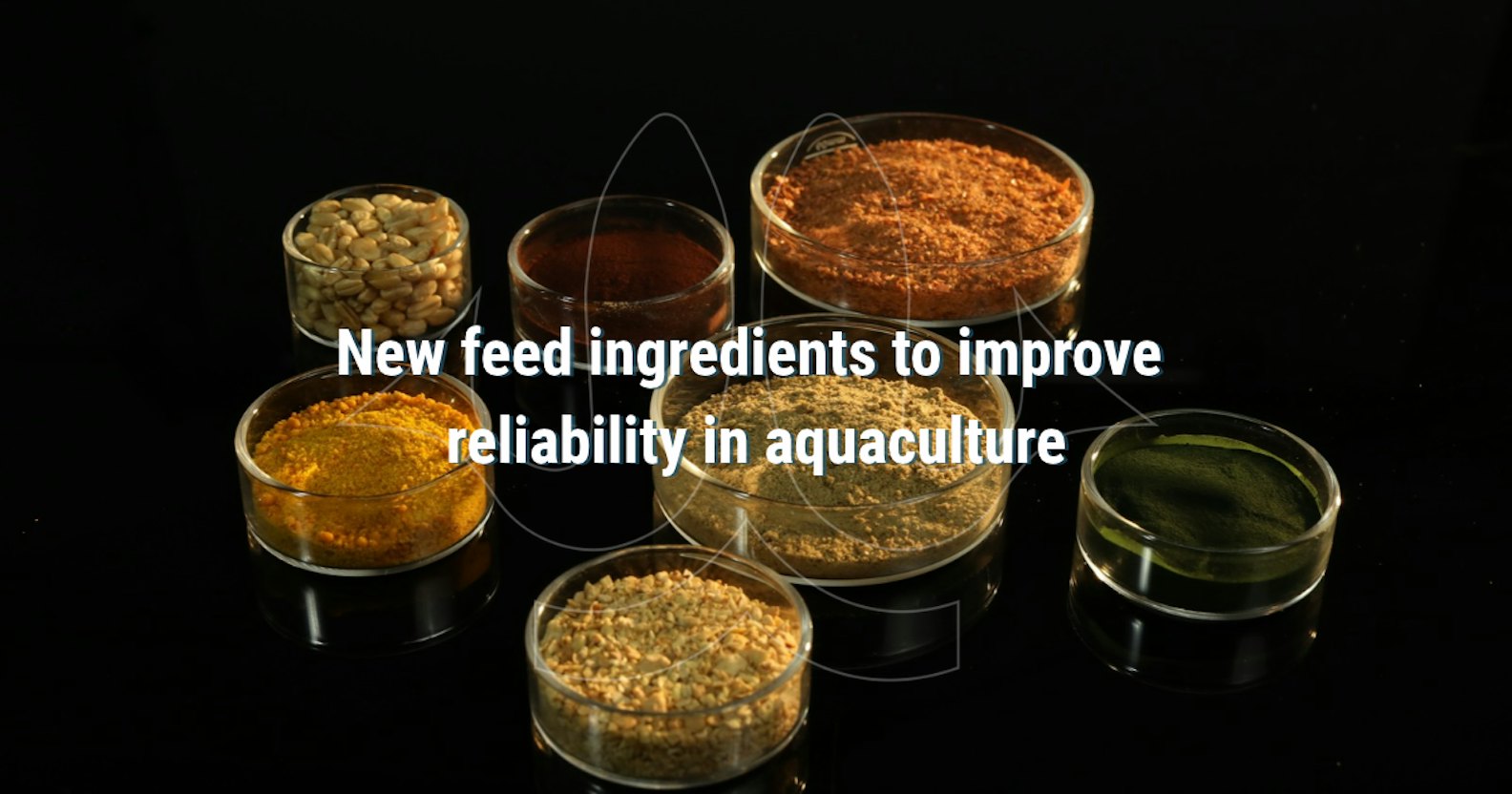
For decades fishmeal has been a cornerstone in aquaculture feed; especially in feed for carnivorous fish species and shrimp. Fishmeal is a nutrient-rich source of protein that most farmed fish can digest and utilise, which is why this raw material has been a common ingredient in almost all fish feed formulations since the 1970s.
“Fishmeal was cheap, it was available and at the same time had a nutritional profile that suited the fish we eat in our part of the world,” explains Jesper H. Clausen, Group R&D Director at Aller Aqua. “It was always the obvious choice as it was easy to formulate with.”
But as demand for fish on the global market increased, aquaculture grew too, causing fishmeal prices to rise significantly. During the 1990s, this prompted several feed producers to start looking for alternatives to fishmeal.
More than one replacement for fishmeal
Aller Aqua was amongst the first feed solution providers that quickly realized that fish feed needs to do more than simply feed fish in a pond.
“Good feed ensures good and natural growth and an overall healthy fish. But when making it we must ensure that all raw materials used are responsibly sourced and help improve sustainability over time,” says Jesper H. Clausen. “Here we see new raw materials such as insect meals and single-cell proteins will be contributing more in the coming years.”
Aller Aqua also follows the development of fermented and concentrated plant proteins closely, and expects the results will help stabilize aquaculture feed prices in the future.
These alternative ingredients will surely help us as producers in making a more complete and far more price-resistant feed for the fish farmers.
R&D work pivotal to the future of aquaculture
Over the years, Aller Aqua R&D team has tested a wide range of protein types, from soya, faba beans and peas to grass, lucerne, insects and some single cell proteins. But regardless of type, one thing is always important:
All alternative protein sources must be digestible and healthy for the fish. We really don’t want to compromise growth and overall well-being of the fish with the feed. This is very important. New ingredients are not a compromise. They are essential supplements.
Several of the ingredients the R&D team has tested have proven to be effective – both in terms of cost and nutritional value for the farmed animals. Many of these ingredients are now used in commercially available fish feed products. But the process, going from idea to a finished product is anything but simple.
Plant-based proteins are sometimes digested differently by the fish than the marine proteins are. Here enzymes and functional additives can help the fish digest the new raw materials better. Personally, I find this very interesting, as it helps our customers sustain a healthy business as well as brings us another step closer to a more sustainable aquaculture production.
In another recent trial fermentation technology was tested. The aim of this project was to address the very same challenges as mentioned above.
“Some of the protein structures we find in plants are simply not available to the fish. Fermentation can help break down these proteins, making them easier for the fish to digest and utilise,” Jesper Clausen explains and points to the fact that the process also produces smaller peptides that increase the palatability of the feed to the fish.
From idea to R&D to innovative formulations
Although at Aller Aqua, R&D has its own modern test facilities in Büsum, Germany, developing feed for the aquaculture of the future is far from a one-company job. New developments always take place in close collaboration with research centres and universities across the world, and often with fish farmers themselves.
“Ideas can come from anywhere,” Jesper H. Clausen explains, giving an example: “The grass protein project arose following a political decision to source raw materials closer to Europe. Instead of being dependent on imported raw materials from the other side of the Atlantic the aim was to have more control over availability a little closer to home, so to speak.”
The decision was further reinforced as the weather phenomenon El Niño caused parts of the South American fishery – an important source of fishmeal – to decline dramatically, pushing fishmeal prices even higher.


''The University of Life Sciences in Norway followed up on the political decision and initiated a project. We and some selected fish farmers became involved and got the project started.'' Jesper H. Clausen, Group R&D Director at Aller Aqua
The researchers first began looking more closely at the structures of proteins found in grass and compared them with proteins typically found in the digestive systems of different fish species. Could the fish absorb these grass proteins, and could they grow and develop properly when fed these proteins? And were there differences between proteins in different types of grass?
Once we had built up sufficient knowledge, we developed some trial formulations. First, we tested it at our test centre and then with the fish farmers. The process is often a long one, and it requires commitment from all the stakeholders involved.
According to the R&D Director, the research and testing phases can easily stretch over four to five years before new ingredients are approved and incorporated into a product the farmers can use.
“Some projects require a long-term view, while others – for example insect proteins, faba and barley proteins – are shorter, as the research here was already quite advanced when we picked it up.”
The best feed also delivers a healthy bottom line
In many parts of the world, fish farmers have been under pressure from rising prices. Earnings have been declining, making it tempting for many farmers to just buy the cheapest available feed. Something Jesper Clausen fully understands.
“If feed prices follow raw material prices, while the supermarket does not follow suit, this creates an economic squeeze on the fish farmers. It can affect their liquidity, forcing them to settle for the cheapest feed, even though all R&D calculations show that you get a much better price per kilo of fish using quality feed.”
The balance for feed producers is therefore quite delicate. On the one hand, they must meet increasingly stringent requirements for sustainability, lower CO2 emissions and improved animal welfare. At the same time, producers need to keep feed prices low enough for fish farmers to remain competitive.
Everyone in the industry is challenged by the increasing prices. But we cannot just sit passively by and wait until there are explicit requirements from the EU, supermarkets or consumers. We must find good solutions. Having previously focused on ‘nutrition’, we now also need to think in terms of ‘availability’ and ‘precision nutrition’. It is about finding the best alternative raw materials that are available at a price fish farmers can afford. This is the real challenge!
Innovation never rests
Jesper H. Clausen and the rest of Aller Aqua’s R&D team are already looking at potential new ingredients to improve fish feed even more. Currently, a project is examining a particular type of binding agent from jellyfish, while also looking at the potential of a number of single-cell proteins, as well as utilising marine ingredients like crab by-catch.
“Some would surely say that we are going a little ‘above and beyond’. But look at it this way: if just some of these projects lead to something that can be used on a large scale, we can also help influence the regulatory process that always follows in the wake of development and innovation.”
For Clausen, however, the importance of working together across the industry cannot be underestimated.


“We must collaborate across borders and cultures. Politics, research, development, production and fish farming – it all goes together. It is the only way forward.” Jesper H. Clausen, Group R&D Director at Aller Aqua


